


I used to think this sounded like a hypothetical thought experiment with a tenuous connection to ROI for enterprises, until I saw it play out live myself.
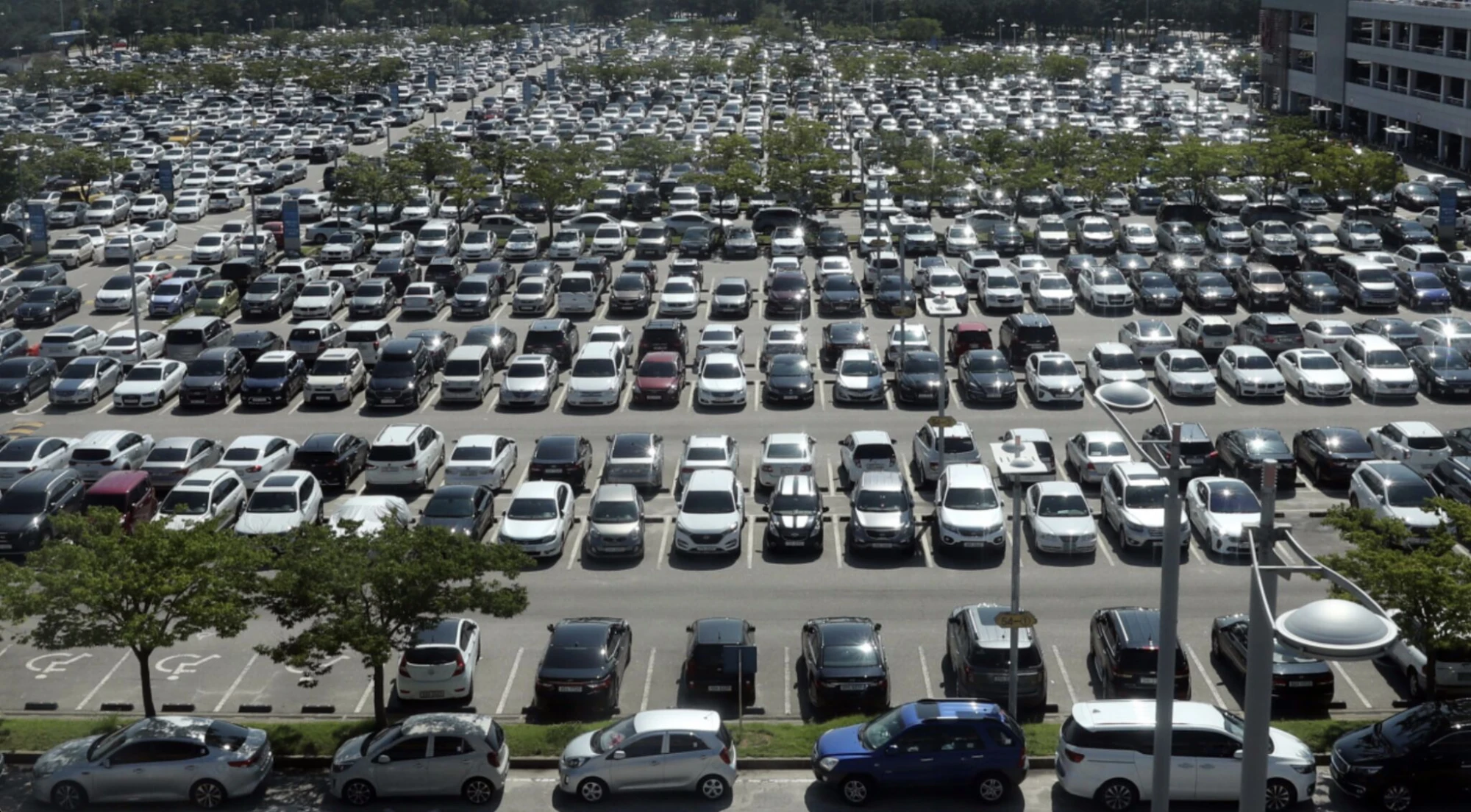
Wayleadr recently had the opportunity to get up on a rooftop overlooking a massive corporate campus with roughly 5,000 parking spaces spread across multiple surface lots. We wanted to see firsthand what employees experience when they arrive at work, and it was fascinating (plus a little painful to watch).
Early arrivals had it easy to pull in, find a spot, head to work. Maybe one minute of time spent. But as the morning progressed, things got interesting. We watched cars circle lots, drive up and down aisles, double back, and eventually move on to another lot. Some employees spent 6–8 minutes just searching for a space. These were mostly engineers, with an average salary over $100k. It gets worse, since this campus also has remote parking lots, some more than a mile away. An employee might spend 10 minutes searching for a spot near their building, realize the lot is full, drive to a remote lot, park, wait for a shuttle, and finally make it to work.
The final frustrating part of this scenario is that there may be hundreds (!) of open spaces elsewhere on campus that someone could have driven straight to painlessly. Employees just can’t see them today.
So what does it cost? Say half the people parking on that campus, 2,500 employees, arrive after the easy spaces are gone and each loses just two extra minutes. That’s over 80 hours every morning, and at a $100k salary (about $48 an hour) it comes to roughly $4,000 a day, or about $1 million a year over 250 working days. And that’s the low end, since some of the people we watched spent 6–8 minutes.
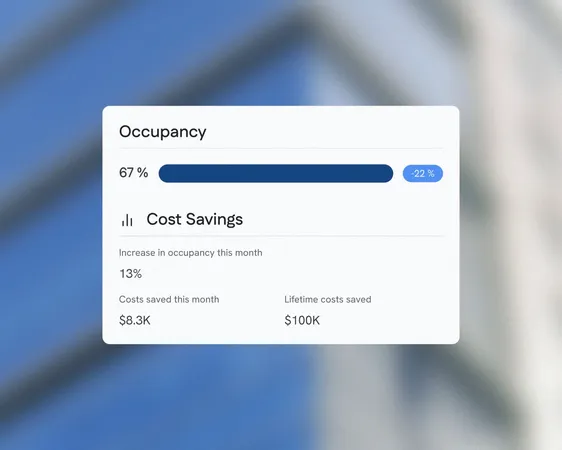
This is one of the problems we’re working to solve at Wayleadr, and we solve it for large employers using a combination of wireless sensors, cameras, and software – to understand parking availability across massive surface parking environments. That gives administrators and Workplace teams valuable data on utilization, dwell times, peak demand, and where capacity actually exists.
But the more exciting part is getting that information into employees’ hands. And we’re not just talking about showing which lots have availability. We can identify open parking spaces individually. For example, imagine arriving at work and seeing a real-time map on Apple CarPlay showing exactly which spaces are occupied and which are available. Instead of guessing which lot to enter, you can head directly toward an open space.
The goal isn’t necessarily to create more parking (especially at today’s leasing prices). It’s to make the thousands of spaces that already exist easier to find. And after watching those cars circle from the rooftop, it’s hard not to think about how much time we could give people back.