After years of pandemic disruptions, a key question remains: How can companies revitalize office culture and inspire employees back to the workplace? As return-to-office plans stall amidst worker reluctance, an unorthodox solution is gaining traction: shuttle commuting.
Beyond transportation, corporate shuttle programs represent a strategy for conquering modern workplace challenges. They alleviate commuter headaches, provide cost savings, and cultivate outstanding commuter experiences that inspire productivity and satisfaction.
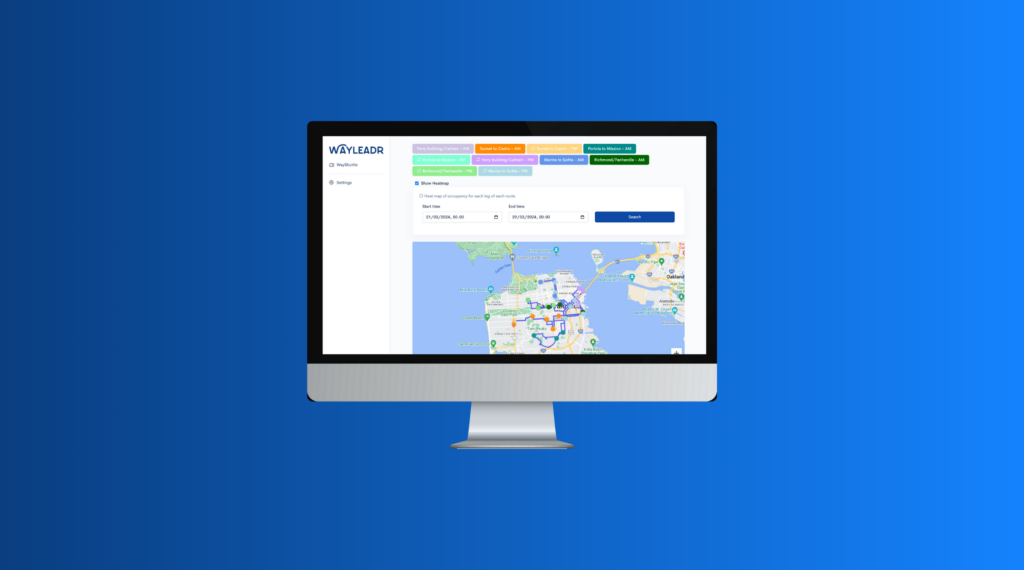
At their core, shuttle programs aim to bring dispersed teams together through convenient, sustainable mobility. With a dedicated shuttle bus management platform, organizations can plan routes, track ridership, and adjust schedules based on real demand — all from a single dashboard. As commuting habits transform in this new era of work, the advantages of managed shuttle services are compelling.
Changing Landscape of Commuter Habits
The pandemic brought colossal disruption to our daily work routines. As lockdowns took hold, commuting in major cities like Tokyo, London, and New York plummeted at a dizzying rate. Many predicted these masses of office commuters would never return to their grueling daily treks.
However, recent data tells a different story.
According to a recent Financial Times analysis of Google mobility trends and local transit authority data, commuting is undeniably reviving across cosmopolitan hubs. In Mexico City, Paris, and Berlin, workplace arrivals are steadily rebounding towards pre-pandemic levels.
Yet the way we commute has been irrevocably altered. Some professionals favor less frequent but lengthier trips, while others opt for hybrid home/office routines.
In New York, many now commute into Manhattan offices for partial workdays instead of a traditional 9-to-5 commute. Individual preferences continue evolving, reflecting our revised attitudes towards work-life balance.
Amid this changing landscape, employee shuttle programs are gaining traction as the pivotal answer to revitalizing office culture.
Benefits of Shuttle Commuting
At their core, managed shuttle services provide more than just transportation – they resolve critical modern workplace conundrums. By delegating the daily commute to dedicated drivers and vehicles, employees eliminate the headaches of traffic congestion and parking woes. But the perks extend far beyond eliminating stress.
Financially, shuttles make meaningful impacts for both organizations and individuals. Employees can cut costs otherwise spent on gasoline, vehicle maintenance, and parking fees. For companies, managed mobility solutions enable unprecedented oversight into transportation expenses while reducing overhead.
Then there are the sustainability gains. Switching from single-occupancy vehicles to employer-provided shuttles brings a significant reduction in pollutants and traffic density. This aligns with rising eco-conscious sentiment as well as municipal policies favoring public transit.
Psychologically, shuttle commuting may boost overall workplace satisfaction and productivity. A famed Harvard Business School study found that using the commute as “transition time” to mentally enter work-mode enhances our engagement and job satisfaction. Employees making use of shuttles gain this valuable “prospecting” period to relax, reflect, and focus before clocking in.
Technology Enhancing the Commute
Like many aspects of the modern workplace, innovative technologies are transforming the shuttle commuting experience. Many projections suggest private vehicle ownership will drastically wane within the coming decade as city policies, sustainable values, and autonomous transit options converge.
This opens immense opportunities for pioneering mobility solutions to flourish. For example, solutions like WayShuttle by Wayleadr optimize every facet through intelligent software integrations.
Another particularly compelling concept is the roboshuttle – self-driving, low-capacity minibuses (4-8 seats) operating on optimized routes. These systems could provide clean, affordable, and hyper-convenient mobility for commuters.
Companies already leveraging technologies like WayShuttle would have a remarkable head-start for seamlessly integrating roboshuttles into their operations.
While roboshuttles remain conceptual for now, cities are undoubtedly moving towards favoring public transit and ridesharing over personal vehicles. Savvy enterprises recognizing this transformation can gain a pivotal competitive edge – both for recruiting/retaining top talent and enhancing their eco-consciousness.
Shuttle Commuting Embraced by Major Enterprises
At Wayleadr, we’ve seen firsthand how shuttle commuting could very well catalyze the office renaissance as the pandemic’s impacts gradually subside.
We have seen some of the world’s largest enterprises offer commuter shuttles, using Wayleadr. Numerous other companies are swiftly unveiling bespoke shuttle programs to ease the transition to hybrid scheduling models.
They realize that by providing exceptional, stress-free commuting experiences, they can incentivize talent to renew office relationships and rekindle workplace cultures.
As the modern workforce embraces a new era of urban mobility, leading organizations have an unprecedented opportunity to pioneer outstanding commuter experiences. Integrating solutions like WayShuttle allows them to craft premium shuttle services while capturing meaningful ROI through oversight, efficiency gains, and sustainability. With such mobility management tools, the morning commute transforms from a dreaded slog into a reinvigorated workday experience.
Ready to explore how shuttle commuting could reinvent your workplace? Book a demo with our employee transportation experts to discover if a tailored Wayleadr shuttle program is right for your organization!
Frequently Asked Questions
Do office shuttles help with return to office?
Yes. Shuttles remove the two biggest RTO objections — commute cost and commute time. Companies offering shuttle programs see measurably higher in-office attendance, especially from employees who previously cited the commute as their reason for staying remote.
How much does an employee shuttle program cost?
Depends on distance and frequency. Typical costs range from $15-40 per rider per day for fixed-route shuttles. On-demand shuttle platforms can optimize routes and reduce per-rider costs by 20-30%.
What makes a shuttle program successful?
Reliable schedules, clean comfortable vehicles, real-time GPS tracking, routes that serve where employees actually live (not just convenient stops), and integration with the company’s broader commute platform.