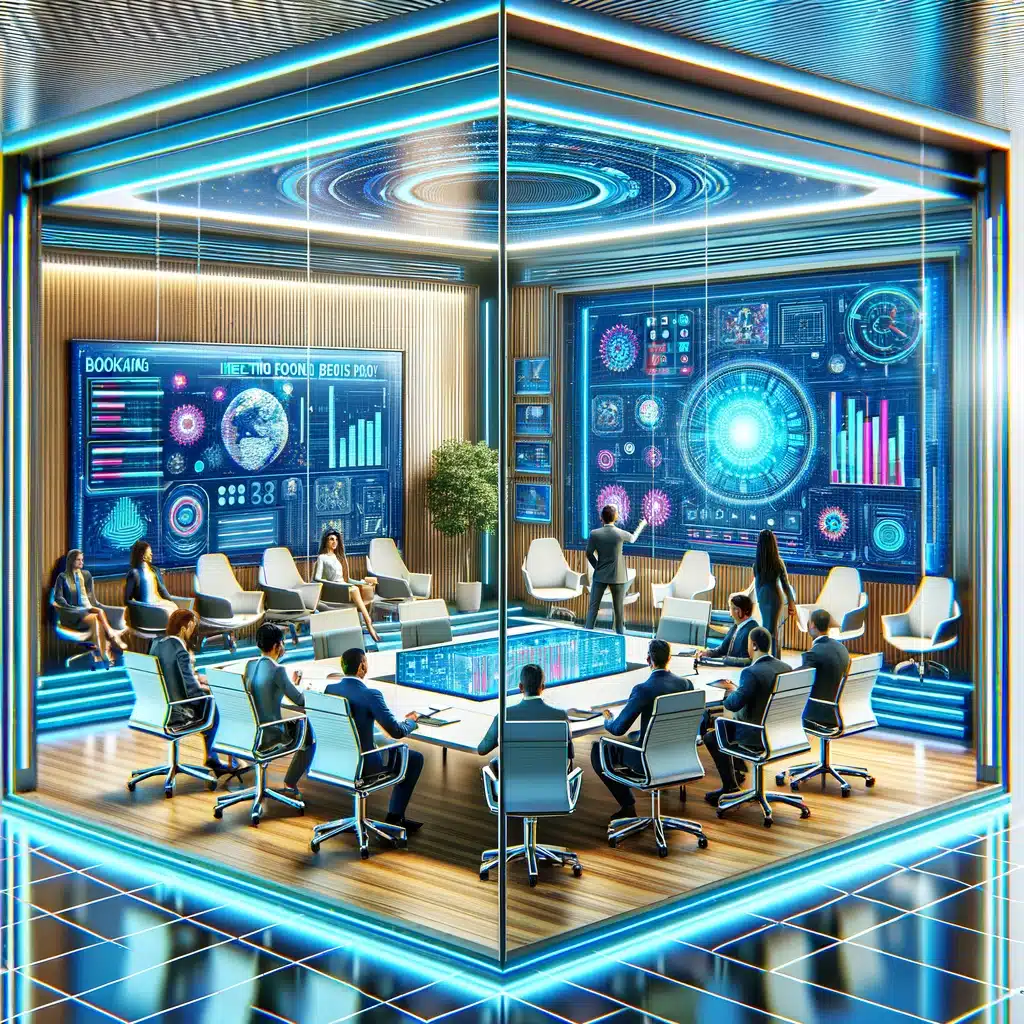
In the evolving landscape of modern workplaces, the ability to efficiently manage meeting spaces has become increasingly vital. Hence, a state-of-the-art meeting room booking system is no longer a luxury but a necessity for fostering effective collaboration. This system is a key component in transforming how businesses utilize their meeting spaces.
The Pivotal Role of Meeting Room Booking Systems
Firstly, a well-structured booking system simplifies the process of securing meeting spaces. This ease of use is crucial in fast-paced work environments where every minute counts. Wayleadr’s integrated booking platform. For practical strategies to get more value from your existing rooms, see our 7 tips for improving meeting room utilization extends this convenience to desks and meeting rooms alike, giving employees a single system for all workspace reservations. Additionally, it ensures that all available spaces are utilized to their full potential, avoiding the common issue of underused or double-booked rooms.
Diverse Meeting Spaces Optimized for Collaboration
Meeting Pods and Booths: In open-plan offices, the privacy of meeting pods and booths is essential. Notably, these spaces are perfect for confidential discussions or focused solo work. A robust booking system ensures these areas are accessible and efficiently used.
Brainstorming Zones: Similarly, informal brainstorming areas, designed for sparking creativity, benefit significantly from a booking system. This system guarantees these spaces are available for impromptu or scheduled creative sessions.
Break Rooms: Moreover, managing break rooms through a booking system can enhance their use for informal gatherings, contributing significantly to team bonding and stress reduction.
Informal and Formal Meeting Rooms: Furthermore, both informal and formal meeting spaces require efficient scheduling. Whether it’s a casual team huddle or a high-stakes client meeting, a reliable booking system streamlines the process.
Analytics for Informed Decision Making
Importantly, the best booking systems provide analytics on space usage. This data is invaluable for understanding how meeting areas are utilized, assisting in making strategic decisions about office layout and resource allocation.

Find out how Wayleadr’s award-winning arrival technology solves space management issues for companies all over the world.
Essential Features of an Meering Booking System
When considering a booking system, focus on user-friendliness, seamless integration with existing software, and the ability to provide insightful data analytics. Additionally, a system that contributes to reducing office costs is highly desirable.
Expanding Beyond Traditional Meeting Management
Furthermore, advanced booking systems are now evolving to offer more than just room reservations. They are becoming integral tools for managing a variety of collaborative spaces, adapting to the unique needs of each organization.
In conclusion, a comprehensive meeting room booking system is a strategic asset in the modern office. It not only simplifies meeting management but also enhances overall workplace collaboration. As companies continue to adapt to new ways of working, the importance of an efficient, user-friendly, and data-driven booking system cannot be overstated. It’s a key factor in building a collaborative, productive, and contented workforce in today’s dynamic business environment.
Eager to see how Wayleadr can revolutionize your workspace experience? Contact us for a free demo and join the ranks of companies like Sanofi. Getting the technology right is only half the equation — a clear meeting room booking policy ensures teams actually follow the system in embracing the future of work.
Frequently Asked Questions
What does a meeting room booking system do?
It lets employees reserve rooms through an app or calendar integration, shows real-time availability across floors and buildings, auto-releases no-shows, and gives facilities managers utilization data to optimize the room portfolio.
How does a booking system reduce wasted office space?
Usage data reveals which rooms are underused and which are over-booked. Facilities teams use this to repurpose low-demand rooms (e.g. convert a rarely-used 20-seat boardroom into two 8-person huddle rooms) and avoid leasing additional floors.
Can meeting room booking integrate with parking and desk systems?
Yes. Platforms that connect rooms, desks, and parking let employees plan their entire office day in one booking — reducing friction for hybrid workers and giving the company a single view of space utilization.