We’ve all felt the pain of manual parking – from the inevitable chorus of horns honking as you engage in a high-stakes dance with a parallel parking spot, to the cold sweat of reversing into a space seemingly designed for a toy car, not your family sedan. These common parking follies not only test our driving skills but also our patience. As its name implies, autonomous parking refers to the technology enabling vehicles to park themselves without human intervention. This system relies on a sophisticated combination of sensors, cameras, and artificial intelligence to safely maneuver cars into parking spots.
How Do Autonomous Parking Systems Work?
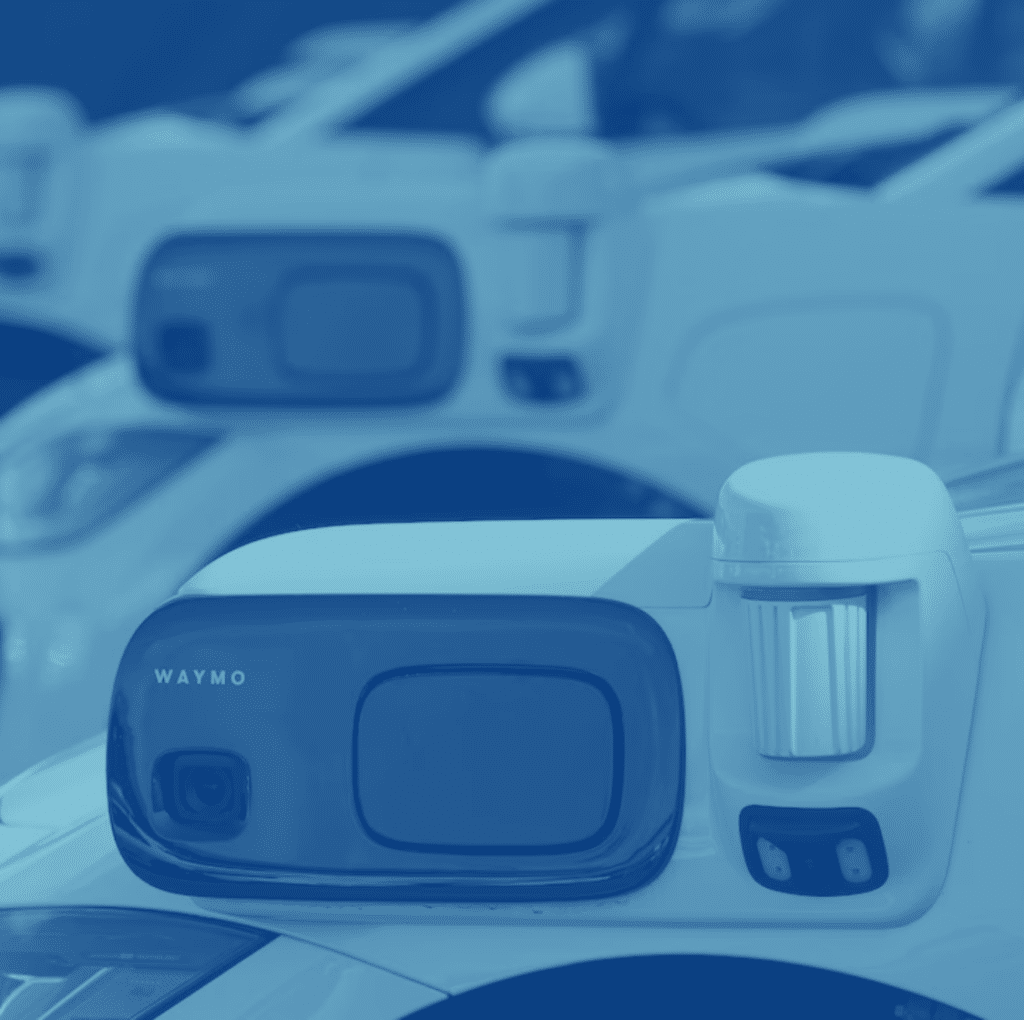
Autonomous parking systems function by integrating data from various sensors and cameras mounted on the vehicle. These sensors scan the surrounding environment to detect obstacles, measure distances, and guide the vehicle to an available parking space.
The most advanced systems even allow drivers to exit their cars and command the vehicle to park itself using a smartphone app. This technology is not only convenient but also enhances safety by reducing the likelihood of parking-related accidents.
The Role of Parking Management Software
To fully realize the potential of autonomous parking, effective parking management software is crucial. Parking management software offers robust solutions to streamline parking processes, providing real-time data and analytics to optimize parking space usage.

Such software, like Wayleadr, plays a pivotal role in guiding autonomous vehicles to available spaces, thereby enhancing efficiency and reducing congestion in parking areas.
Is Autonomous Parking Safe?
Safety is a paramount concern when discussing any autonomous technology.
Fortunately, autonomous parking systems are designed with multiple fail-safes and redundancy features.
The integration of AI and machine learning further ensures that these systems can adapt and respond to dynamic environments, reducing the risk of accidents and ensuring a high level of safety.
Impact on Urban Planning and Mobility
Autonomous parking is more than a technological marvel; it’s a tool that can reshape urban landscapes. By reducing the need for large parking lots and spaces, cities can repurpose land for more valuable uses like green spaces or commercial development.
Furthermore, the efficiency brought by autonomous parking can alleviate traffic congestion, leading to smoother urban mobility and reduced carbon emissions.
What Does the Future Hold for Autonomous Parking?
The future of parking looks promising, with continuous advancements in technology and growing integration with smart city infrastructures.
As we see autonomous vehicles becoming more prevalent, the industry is buzzing with developments, like Tesla’s recent release of its vision-based auto parking system for its newer vision-only vehicles.
With such advancements, we can expect a seamless transition to more intelligent and efficient parking solutions, reshaping our experience with personal and urban transportation.
Autonomous parking is one piece of a broader evolution. See our predictions for workplace parking in 2025 for the full picture.
The autonomous vehicle revolution extends beyond parking. Our piece on the big leap for driverless cars covers the broader trajectory.
Frequently Asked Questions
What is an autonomous parking system?
A system where vehicles park themselves without human input — using sensors, cameras, and AI to navigate to an assigned space. Also called automated valet parking (AVP). Currently available in limited premium venues and select new vehicle models.
When will autonomous parking be widely available?
Limited deployments exist today at premium venues and with specific vehicle brands. Widespread adoption is likely 5-10 years away, dependent on vehicle technology standardization and infrastructure upgrades.
Should companies plan for autonomous parking now?
Not at the expense of solving today’s problems. Focus on optimizing current operations with booking and allocation software. Design new garages with future flexibility (narrower spaces, no pedestrian access needed) but don’t wait for autonomy to fix parking.
How much does a robotic parking system cost?
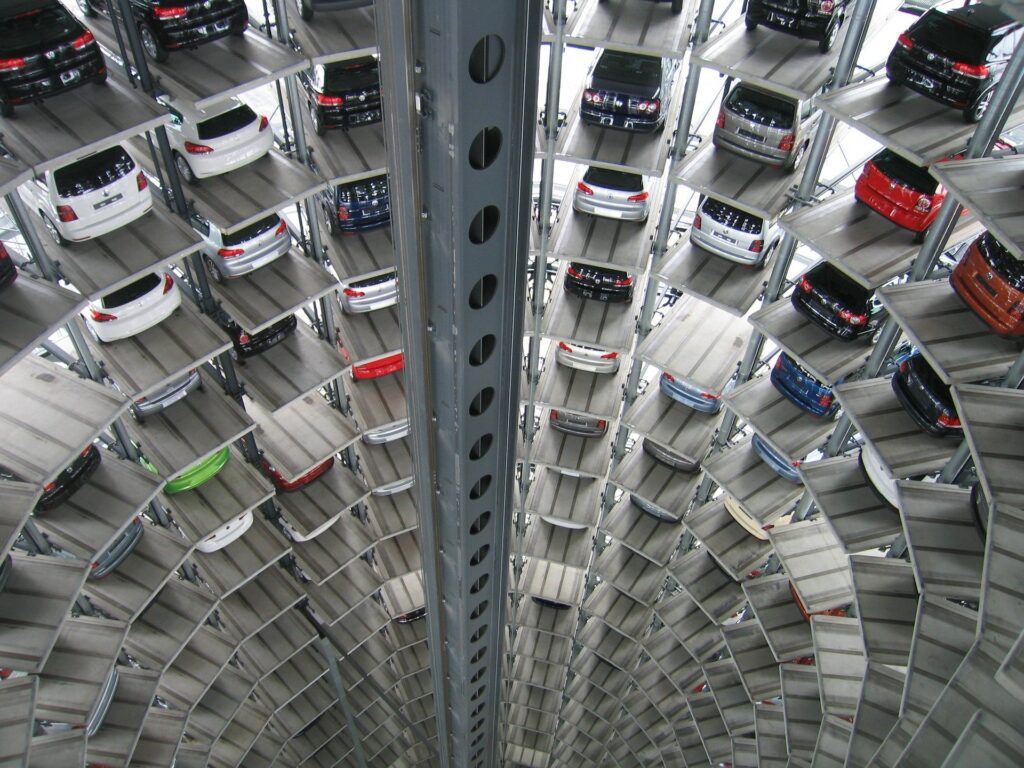
Robotic parking systems are significantly more expensive than conventional surface parking or sensor-based parking management software. Industry estimates put per-space hardware costs between $20,000 and $40,000 for smaller installations, with full automated multi-level garages running tens of millions in total project cost. Annual maintenance is typically 3-7% of the install cost. For most workplaces and residential properties, software-based parking management with digital access and real-time occupancy delivers strong utilization gains at a fraction of the capital outlay.
What are the disadvantages of an autonomous parking system?
Autonomous parking systems trade flexibility for density. The main disadvantages are high upfront capital cost, vendor lock-in once installed, mechanical maintenance complexity, and the difficulty of scaling capacity if demand grows. Recovery from system downtime is also slower than recovering from a software glitch in a sensor-based system. For organizations whose primary problem is allocation efficiency rather than physical space scarcity, software-based parking management is usually a better fit.
Eager to see how Wayleadr can revolutionize your workspace experience and enhance your employee satisfaction? Contact us for a free demo and join the ranks of companies like Sanofi in embracing the future of work.